The Role of IoT in Modern Industrial Automation: A Global Perspective
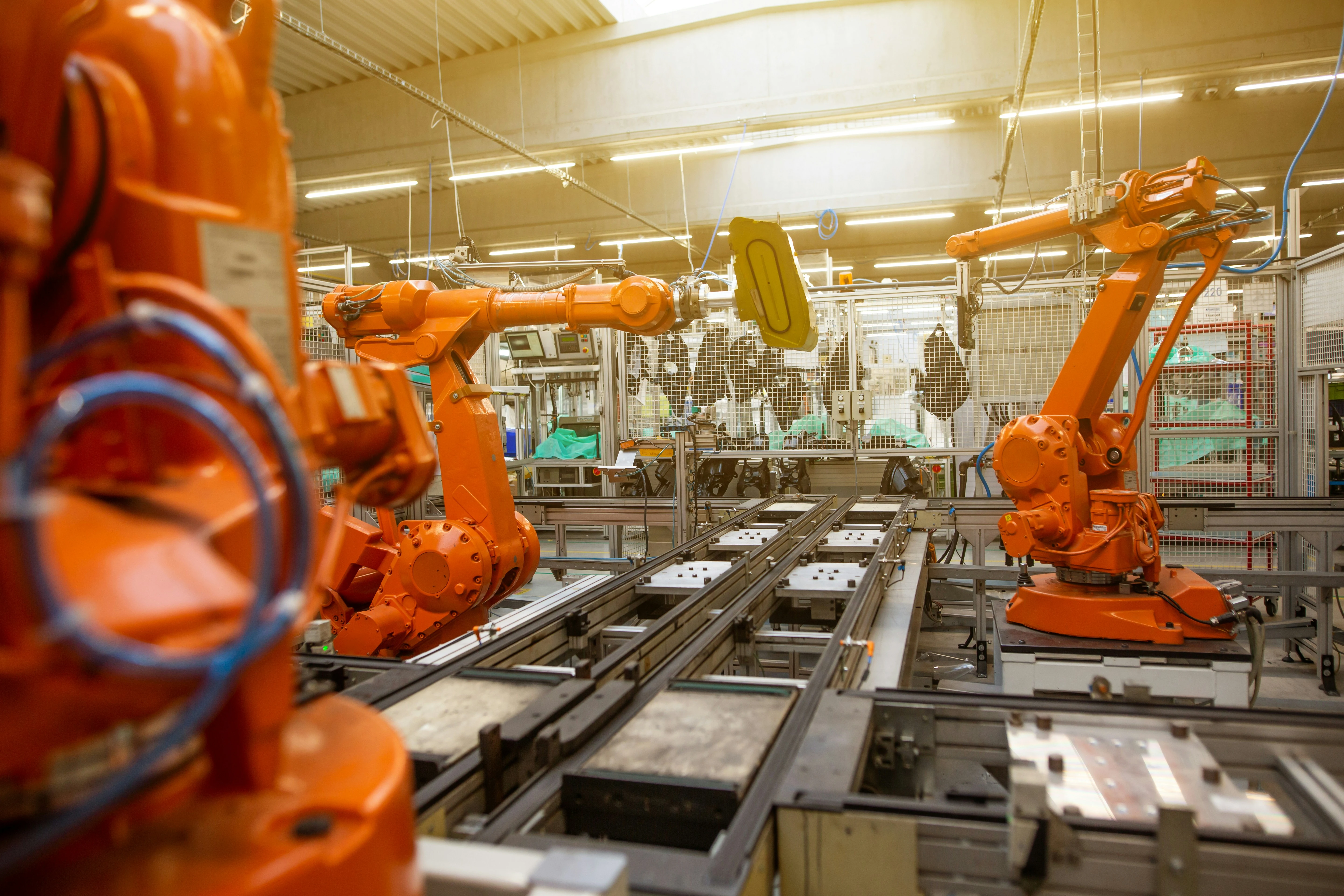
Industrial IoT (IIoT) is changing how factories and industrial plants are run worldwide. By connecting machines, sensors, and business systems, IIoT gives operators more automation and a far clearer view of what is happening on the plant floor.
How an Industrial IoT System Fits Together
Nearly every IIoT system has the same layers: measurement, a gateway, and a platform. Measurements come from two places. Your machine controllers already know a great deal, including cycle counts, speeds, temperatures, fault codes, and machine states, and most of it is never looked at. Then there are sensors you add yourself, typically vibration, temperature, motor current, pressure, flow, or energy. We always audit the controllers first. Several of the signals on the wish list usually turn out to be in the PLC already.
The gateway sits between the plant floor and IT. It turns raw register values into named, timestamped measurements, and buffers to disk when the uplink drops. In practice this is an industrial PC or a DIN-rail box running Linux, often with Node-RED or a commercial driver suite such as Kepware doing the protocol work.
The platform stores the time series (InfluxDB and TimescaleDB are common choices), draws dashboards, raises alerts, and feeds MES, ERP, or the maintenance system. Cloud or on-premises depends mostly on your connectivity and data policy.
Modbus, OPC UA, and MQTT
Modbus dates from the late 1970s and is on almost everything: energy meters, drives, older PLCs. It exposes numbered 16-bit registers over RS-485 (Modbus RTU) or TCP port 502, with no security and no description of what any number means. The classic time-wasters are off-by-one register addresses and 32-bit floats split across two registers in a word order the manual does not mention. Do the mapping once, in the gateway.
OPC UA is the modern standard between machines and software. Data is structured and self-describing, and the protocol supports certificates, signing, and encryption. Many current controllers include an OPC UA server. We ask for it on every new machine purchase. Its weakness is weight, and certificate management across a plant takes real effort.
MQTT is a lightweight publish-subscribe protocol. Connections are made outbound from the plant, messages are small, and retained messages and last-will notifications cope well with flaky links, so it suits the hop from gateway to platform. Plain MQTT says nothing about topic names or payload format, which is the gap Sparkplug B fills if you want a convention. Our usual layout is Modbus or OPC UA on the floor and MQTT over TLS from the gateway upward.
Predictive Maintenance and OEE
Most plants start reactive and move to servicing on a calendar. Condition-based maintenance watches a measurement and acts when it crosses a limit. Predictive maintenance uses a model to estimate that a failure is developing, early enough to plan the repair into a scheduled stop.
We are blunt about the predictive end. Failure models need examples of failures, and a well-run plant has very few. So we start with condition monitoring on the most critical assets: overall vibration velocity in mm/s RMS (the quantity the ISO 10816 and 20816 severity charts use), bearing temperature, and motor current, with thresholds and trend alerts on each. That catches many developing faults, and it builds the history a predictive model will need later.
OEE (Overall Equipment Effectiveness) is availability times performance times quality. Recorded by hand it comes out flattering, because short stops go unlogged and stop reasons get filled in from memory at shift end. Taken from machine signals it shows every stop and its length. Expect the first automatic figure to be lower than the one on the whiteboard.
Connecting Old Machines
Nobody will replace a working press to get data out of it, and you rarely have to. If the machine has a PLC with a spare communication port, read it through the gateway and leave the control program alone. If there is no usable controller, fit external sensors. A split-core current transformer clamped around a motor lead tells you running, idle, and off without cutting a wire. A photo-eye counts parts.
Our rule on retrofits is read-only. Monitoring must not touch control logic or safety circuits, which also keeps you out of arguments about warranty and machine certification.
How Do You Keep a Connected Factory Secure?
Connecting plant equipment creates a network path that was not there before, and most industrial devices were designed assuming nobody hostile would ever reach them. Modbus has no authentication at all.
Segmentation comes first. The OT network is kept apart from office IT, with a firewall and a DMZ between them and only named traffic allowed through, which is the layering the Purdue model describes. Gateways open outbound connections to the platform, so no inbound port to a machine is ever needed. If a PLC or HMI is reachable directly from the internet, fix that today.
The remaining items are dull and they matter: unique credentials with defaults removed, TLS from gateway to platform, a patching plan for gateways, and vendor remote access that is logged and switched off when not in use. IEC 62443 is the standard family to reach for if a customer or insurer wants a formal framework.
How Priorities Differ by Region
The technology is the same everywhere, but the reason for buying it varies. In the USA the pressure tends to be getting more output from existing plants when skilled labor is short. In Australia, mining and agriculture run across enormous distances, so remote monitoring matters more and connectivity is the main design constraint. In the UAE, energy and logistics are the usual starting points, and enclosures have to survive heat and dust. In India, where we are based, many small and mid-sized manufacturers run older machines, which makes low-cost retrofits the typical way in.
Common Mistakes, and When IIoT Is Not Worth It
IIoT is not worth the money when nobody will act on the data. A dashboard without an owner changes nothing, and if maintenance and production have neither the time nor the authority to respond to an alert, that is the problem to solve first.
It is also poor value where the process is stable and cheap to stop, or where a simpler fix exists. If a machine keeps stopping because of a known worn part, the answer is a new part and no sensors are required.
Of the mistakes we see, collecting everything "just in case" is the most common. Work backward from a decision you want to make better to the handful of signals it needs.
Another is letting IT or OT run the project alone. IT knows networks and security, OT knows the machines and what must never be interrupted, and a project run from one side stalls at the boundary.
Then there is pilot purgatory, where a pilot works technically and goes nowhere because no one defined success or priced the rollout. A quieter mistake is storing values without context. A temperature means little unless you know the machine and the operating state it belongs to, so settle the tag naming before the second machine is connected.
How to Get Started: Scoping a Pilot
Pick one line or one group of critical assets, and one problem whose cost you can name, such as unplanned stops on the bottleneck machine or scrap on one product. Write down the metric and its value today, even if the only way to get a baseline is two weeks with a clipboard.
Audit the controllers before buying sensors. Agree on who looks at the data and what they do when an alert fires. Get the network design approved by whoever owns security before anything is plugged in.
Keep it short (a few months, not a year) with the success criterion fixed in advance. Choose hardware and a platform that could cover the whole plant, otherwise a successful pilot has to be rebuilt. When it ends, hold a review and decide explicitly whether to roll out, change course, or stop.
Lionasys builds industrial IoT systems, from machine connectivity and gateways to dashboards, alerts, and AI-based analytics. If you are planning a pilot or trying to get more out of the machines you already own, get in touch and we will help you scope it.